
Can You Bail Someone Out of Prison? Jail Release Steps
Can you bail someone out of prison? Usually only pretrial jail custody, not sentenced prison. Steps, holds, costs and Miami-Dade TGK rules explained.
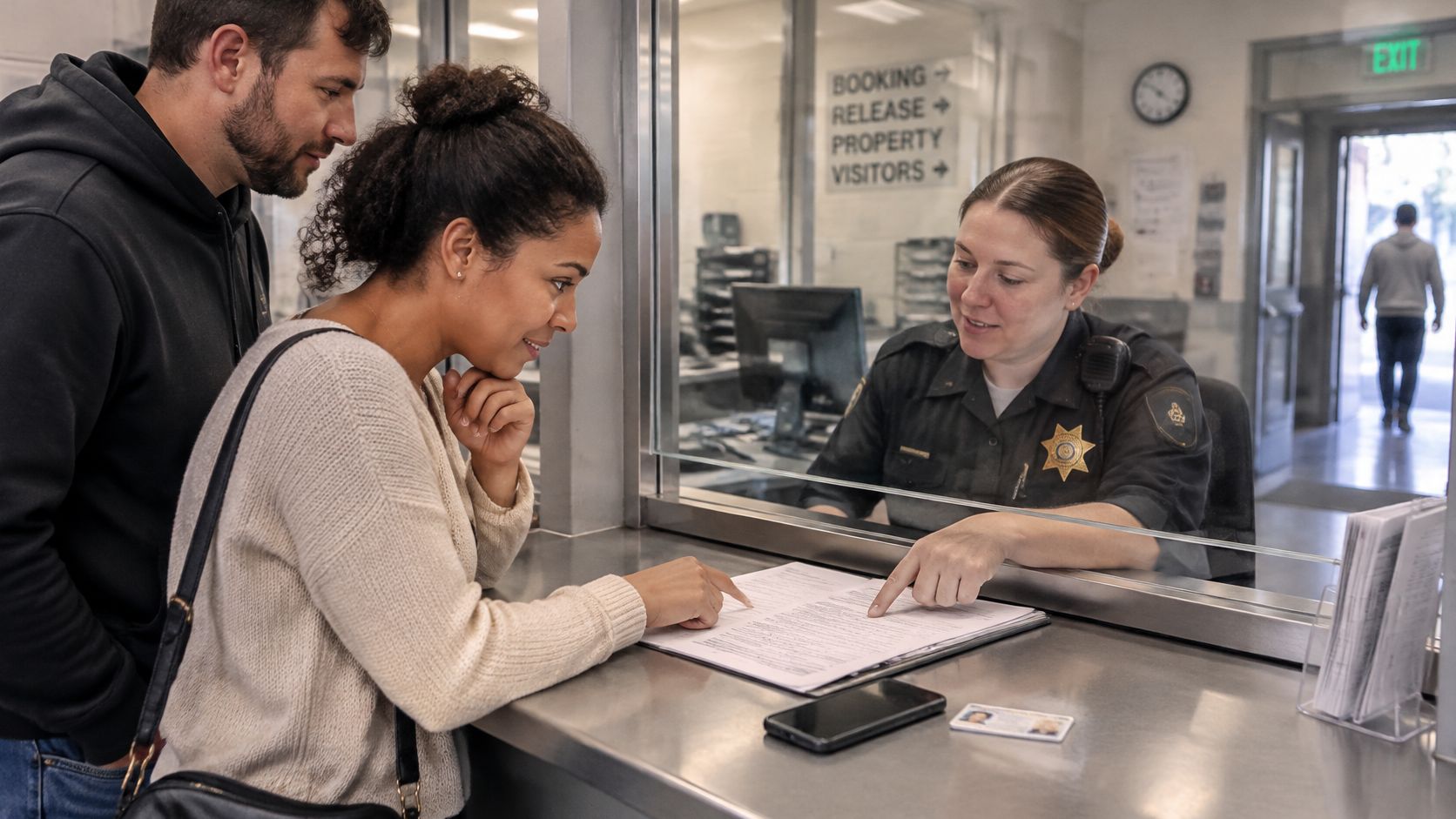
Bail usually can't free someone serving a sentence in prison, but it can often free someone held before trial in jail, unless another hold blocks release. The important question isn't just whether you can pay, it's what legal authority is keeping the person in custody.
That distinction can save a family from committing money before they understand what it will accomplish. Start with the person's custody status, then confirm the release order, outstanding holds, and paperwork.
Jail Versus Prison Custody and When Bail Applies
Bail is primarily a pretrial release tool, not a way to cancel a prison sentence. When someone asks, “Can you bail someone out of prison?” they often mean a loved one was arrested and taken to a county jail.
The building's name doesn't settle the question. A jail can hold someone awaiting trial, serving a sentence, or waiting for another agency to take custody. What matters is the person's legal status and the order authorizing confinement.
Custody types and whether bail applies
| Custody type | Legal status | Can bail release them? | Typical release path |
|---|---|---|---|
| Pretrial county jail custody | Not yet convicted | Usually yes, if release is authorized and no other hold applies | Bond, recognizance, or bond review |
| Sentenced state prison | Convicted and sentenced | Generally no | Appeal, sentence reduction, clemency, or parole where available |
| Sentenced federal prison | Convicted and sentenced | Generally no | Appeal, compassionate release, or clemency where legally available |
| Probation or parole violation hold | Under supervision | Not automatically | Revocation proceedings or a judge's release order |
| Immigration detention | Civil custody, not criminal | Sometimes, if eligible | Immigration bond proceedings before an immigration judge with authority |
A pending charge doesn't automatically mean a financial bond is available. Judges may authorize release without upfront money, impose financial and nonfinancial conditions, or order detention when the law permits it.
In Florida, the bail statutes identify securing court appearances and protecting the community from unreasonable danger as central purposes of bail, and allow defendants required to meet monetary bail to use a surety bond or an appearance bond. That framework concerns conditional release, not the purchase of freedom from every custody order.
Before paying: Identify whether the person is awaiting trial, serving a sentence, or detained under a separate hold.
For someone already serving a prison sentence, a lawyer must evaluate the available post-conviction route. An appeal itself doesn't guarantee release, and parole isn't available for every sentence.
Likewise, a probation or parole hold needs attention from the authority responsible for supervision and the court. Don't treat it as another bill that a family can pay at the jail counter.
Confirming Who Holds Them and Why
Start with the jail's official inmate search and booking desk. Match the person's full legal name and date of birth, then record the booking number, facility, charges, bond entries, and next scheduled hearing.
An online entry is a starting point, not a complete release clearance. Ask staff whether the record includes another case, a sentence, a supervision hold, or a request from another agency.
Detention status checklist
Work through these entries in order rather than stopping when you find a bond amount.
| Hold or status | Where to confirm it | Does a bond clear it? |
|---|---|---|
| Pending charge with bail set | Jail inmate search and booking record | It can satisfy that charge's bond requirement if no other barrier applies |
| Bail set but not yet posted | Booking record and court order | Posting an accepted bond satisfies the financial requirement |
| Sentenced to prison | Department of Corrections or Bureau of Prisons locator and sentencing record | No |
| Probation or parole violation hold | Supervising officer and court docket | Not automatically; a hearing or release order may be needed |
| Immigration detainer | Jail booking notes and ICE custody information | A criminal bond doesn't clear it; separate immigration review is needed |
| Warrant from another county or agency | Clerk records and the issuing agency | Not automatically; the issuing authority must address it |
If you're searching in Monroe County, our Key West inmate search guide can help you organize the lookup. Confirm the actual detention location rather than assuming the arresting city still holds the person.
Historical federal records demonstrate why you shouldn't equate release with a cash payment: among federal defendants whose cases terminated in 1993, approximately 49% were released without financial conditions, according to the Bureau of Justice Statistics report. That finding describes a historical federal population, not someone's eligibility today.
What to ask when another entry appears
Ask the booking desk to identify which agency controls the hold and whether an order, hearing, or transfer is pending. Write down the agency name and case number so an attorney can investigate the correct proceeding.
A family member can supply information and arrange an authorized bond. They can't cancel an independent hold or change the judge's conditions.
How to Bail Someone Out of Jail Step by Step
Once release eligibility is confirmed, accuracy matters more than rushing. A misspelled name, incomplete signature, or missing collateral document can interrupt processing even when the family has the money ready.
Prepare and execute the bond
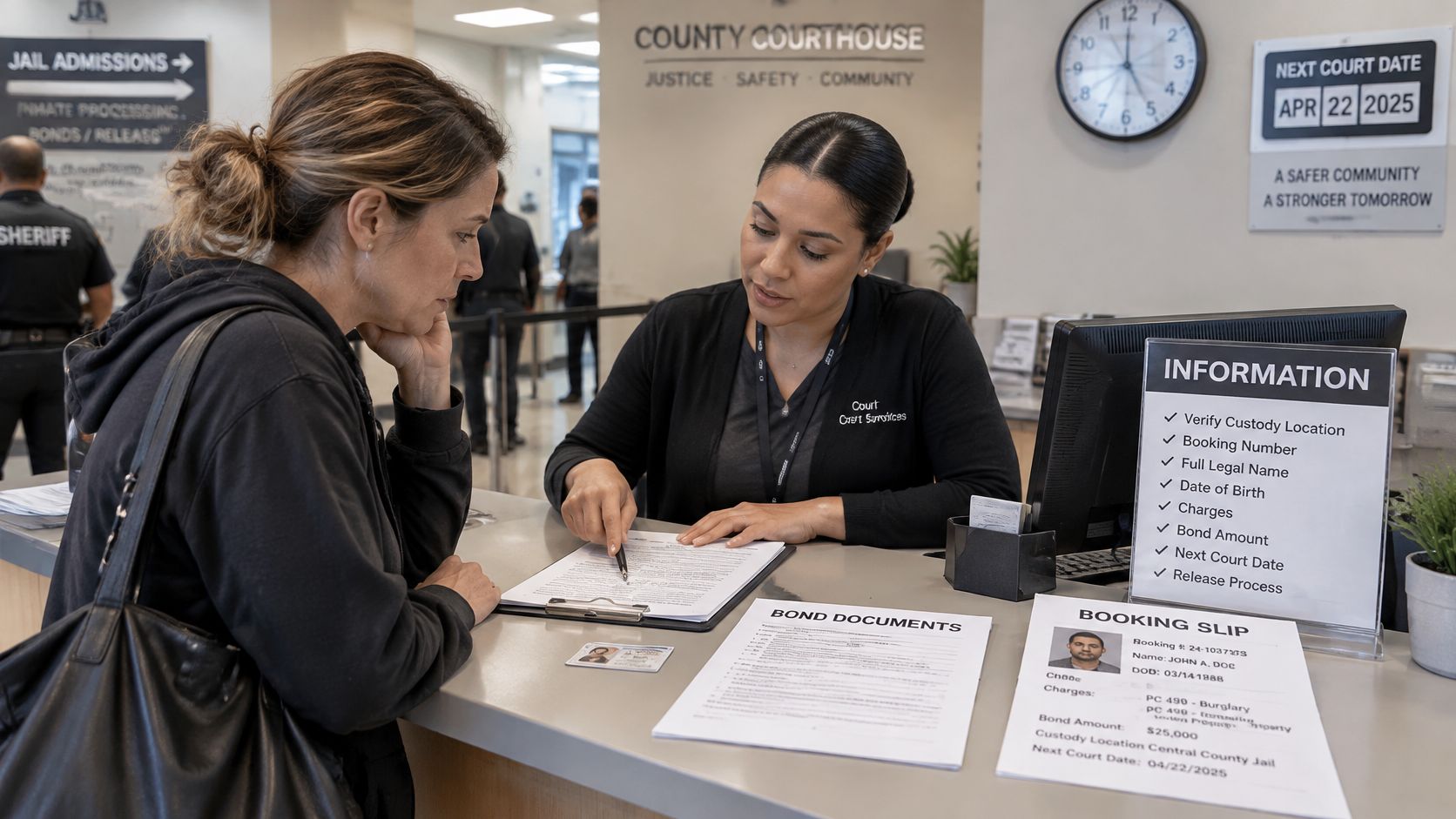
Confirm the complete booking information. Record the custody location, booking number, full legal name, date of birth, charges, bond amount, holds, and next court date. The common mistake is using a familiar nickname or an older booking number instead of the identifiers attached to the current arrest.
Choose an authorized release route. Confirm whether the court permits cash, surety, recognizance, an unsecured appearance bond, or another approved arrangement. Don't assume a property bond or a particular payment method is accepted just because someone used it elsewhere.
Gather the signer's documents. Have government identification, defendant and signer contact information, payment details, and any requested collateral documents ready. If someone will sign as an indemnitor, meaning a person accepting financial responsibilities under the bond agreement, they should read those obligations before signing.
Complete and submit the paperwork. Follow the court or facility's instructions, check every signature field, and retain copies of the signed agreement and receipts. A payment confirmation isn't proof that the facility has accepted the complete bond package.
Verify the written release instructions. Obtain the court date, court location, and conditions before the person leaves custody, or confirm how those documents will be delivered. Don't rely on a hurried verbal explanation when the written order controls what the person must do.
Check the financial paperwork before signing
For a Miami-Dade bond, request an itemized explanation of the premium, payment arrangements, collateral, refund rules, and known holds. Keep the bond agreement separate from the court's release order so you can distinguish contract obligations from judicial conditions.
Florida's bail bond agent statutes require licensed agents to charge a premium at the filed and approved rate, neither above nor below it. An unusually discounted offer therefore deserves scrutiny, not an assumption that you've found a better lawful deal.
A bond receipt confirms a transaction. Confirm separately that the jail has accepted the documents and cleared the person for release.
We can send our bail forms by fax, email, or in person. Before returning them, check that the defendant's identifiers match the booking record and that every required signer has completed the appropriate fields.
Missing paperwork can delay processing after payment. Ask what remains outstanding instead of repeatedly asking only whether the person is “out yet,” because that gives staff a specific problem to identify.
Choosing How to Pay the Bail
| Option | Upfront cost | Money after the case | Best when |
|---|---|---|---|
| Cash bond paid to the court | Full bail amount | Eligible for return after discharge, subject to forfeiture and lawful deductions | The family can cover the full amount |
| Surety bond through a licensed agent | Approved premium plus any required collateral | Premium generally isn't returned; collateral is handled under the agreement and discharge requirements | The family can meet the premium and contractual obligations |
| Property bond | Approved real estate security and applicable expenses | Security is released when the obligation is discharged, unless forfeited | The court accepts property and ownership and equity can be verified |
| Unsecured appearance bond | No upfront bond deposit | Liability may become payable following a failure to appear and forfeiture | The judge authorizes an unsecured obligation |
| Personal recognizance | No bail payment | No bond deposit to return | The judge authorizes release on a promise to appear |
The premium isn't a refundable deposit
The most expensive misunderstanding is confusing the surety premium with collateral. The premium pays for the bond service and financial undertaking; collateral secures obligations under the agreement.
A dismissal doesn't automatically turn the premium into refundable money. Likewise, collateral shouldn't be treated as a fee, and its release shouldn't be assumed to happen just because the defendant has left jail.
Before signing, identify who owns any pledged property and what the agreement authorizes if the defendant doesn't comply. If a vehicle title or real estate document is involved, make sure the owner understands the risk personally rather than relying on a relative's explanation.
Our guide to paying bail can help you organize the payment decision. Compare the total commitment, not just the amount needed to start.
Compare the obligations, not only the upfront payment
A cash bond ties up the full amount while the obligation remains active. A surety arrangement may require less upfront cash, but the signer can take on responsibilities beyond the premium.
- Refund terms: Confirm who receives a cash-bond refund and which lawful deductions may apply.
- Collateral terms: Get a receipt identifying the property, its owner, and the conditions for its return.
- Payment arrangements: Put installment dates, accepted payment methods, and remaining balances in writing.
- Court approval: Recognizance and unsecured release require judicial authorization, not an agent's permission.
If the authorized amount is beyond the family's resources, an attorney can evaluate whether a bond review is appropriate. Don't pledge essential property without understanding both the agreement and the alternatives.
Federal, Immigration and Out-of-County Holds
Paying the local bond doesn't necessarily mean the person will walk out to meet you. They may instead remain confined under another authority or be transferred to another facility.
In federal activated pretrial-services cases during the 12 months ending September 30, 2025, 76.2% of defendants were detained and never released, according to the U.S. Courts detention table, which excludes cases where release wasn't possible within its stated observation window. That's a federal case measure, not a prediction for a Miami-Dade arrest.
Federal custody requires a federal release decision
A federal case follows its own court process. Having money available doesn't establish that the federal judge will authorize release or that a commercial bond is the appropriate mechanism.
Prepare useful information for counsel, such as a proposed residence, reliable contact details, employment information, and someone who can assist with transportation. Our federal bail bonds guide provides context for separating federal release requirements from county bond procedures.
Release can also involve supervision rather than a simple payment. The U.S. Courts pretrial-services report describes conditional release and supervision, which can include reporting, travel restrictions, electronic monitoring, or treatment.
Immigration custody and another county's warrant
An immigration detainer signals a separate custody issue. Posting a criminal bond doesn't cancel it, and immigration bond eligibility requires its own assessment; some people aren't eligible for an immigration judge to grant bond.
Don't assume a transfer to immigration custody means the criminal case has ended. Counsel may need to coordinate obligations in both proceedings.
An out-of-county warrant creates a different problem. Say a person has a bondable Miami-Dade charge but also an active warrant from another county: satisfying the Miami-Dade bond doesn't decide what the issuing county requires.
Before arranging money for a multi-agency case, identify every authority that must approve release.
Ask which agency will take custody next and how to track the transfer. When detention is the obstacle, the useful next step may be legal review of release eligibility or conditions, not raising a larger payment.
Miami-Dade and TGK Release Procedures Explained
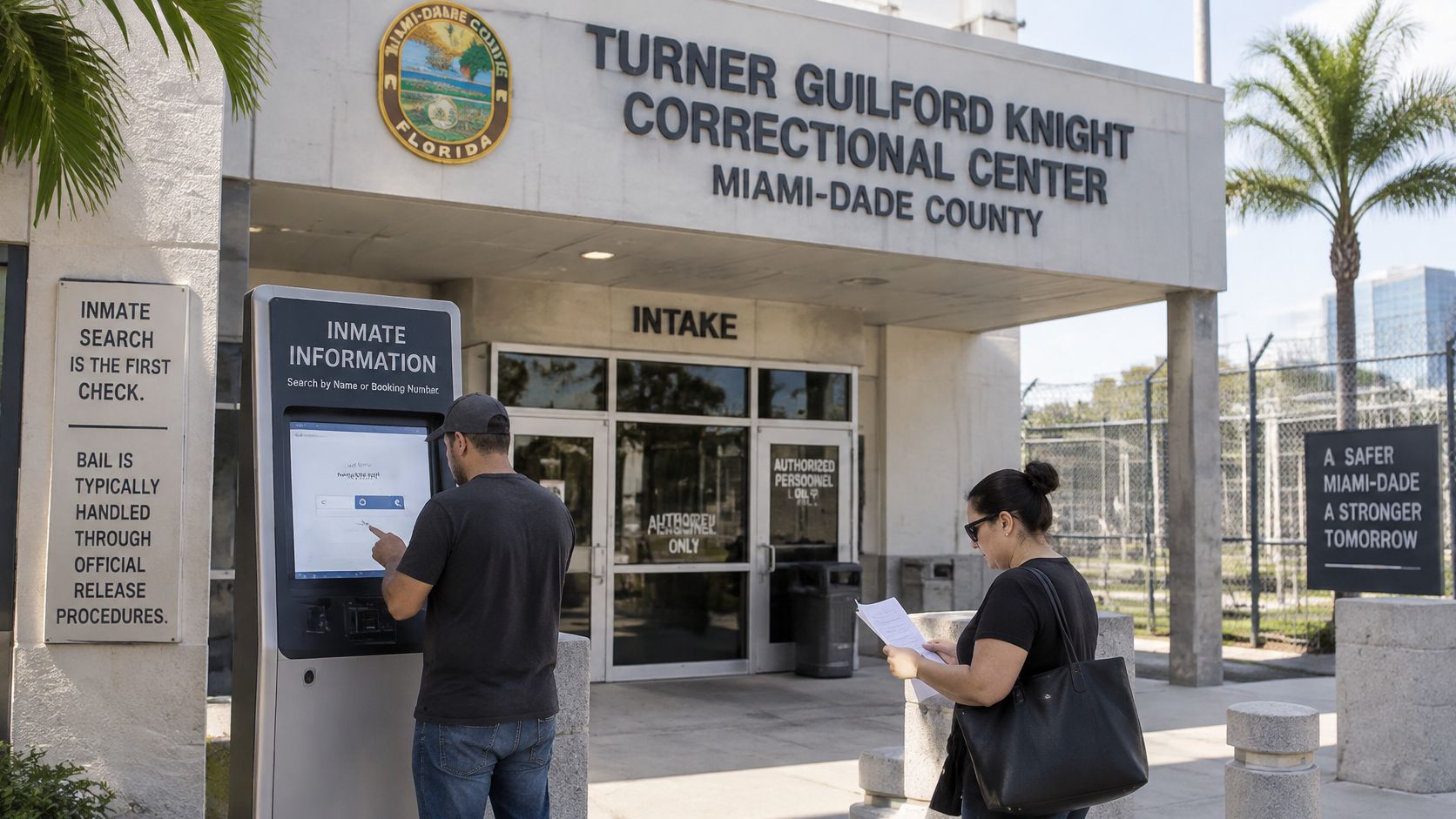
Say a family receives a call after an arrest in Doral and hears that their relative is at Turner Guilford Knight Correctional Center, commonly called TGK. The first task is to verify that location in the Miami-Dade custody record, not immediately drive to a jail.
Search using the person's legal name, then use the booking number to keep later conversations tied to the correct record. An arrest location and a detention location aren't necessarily the same place.
From booking information to an actionable order
The family finds a booking entry but no clear release amount. Rather than guessing, they ask whether a judicial decision is pending and check the court record for the current order.
If an amount appears, they confirm whether it covers every bondable charge. They also ask whether the order requires anything besides posting money, such as an approved address or supervision arrangements.
We handle TGK and Doral cases and can use the defendant's case details to organize the bond paperwork. Our intake process begins with those details, followed by the required documents and payment, rather than a promise based only on the charge name.
Follow the documents to the facility
The family completes the forms and keeps copies. They then confirm that the submission reached the proper recipient and whether any signatures, funds, or supporting documents are still missing.
Our ability to send forms by email or fax shouldn't be confused with a statement that the jail accepts every document through every channel. Confirm the current submission procedure for the actual bond and facility.
After acceptance, the family asks for the current processing status and pickup instructions. If the person moves between facilities, they verify the new location before arranging transportation.
- Booking number: Match it to the current arrest.
- Bond amount: Confirm the current court order and all relevant charges.
- Documents: Check that the receiving office has a complete package.
- Release window: Ask for the facility's current estimate and where pickup will occur.
Don't assume evening or weekend processing follows a fixed timetable. We're available around the clock, but the facility controls its release processing, and an estimate can change if staff identify another unresolved requirement.
Confirm Release Terms and Call a Licensed Agent
Most released defendants in a historical Bureau of Justice Statistics study attended every scheduled appearance: approximately 75% made all appearances, while 25% had a bench warrant issued after missing at least one, according to the BJS study of released felony defendants. Those historical findings aren't a forecast for an individual, but they explain why planning for court deserves as much attention as getting out.
A successful release plan gives the defendant a workable routine, not merely a stack of papers. Choose who will help track hearings, how the person will travel, and where the documents will be kept.
Make compliance practical
Put the court date and location into a shared calendar, then set a backup reminder on another device. Save the case number, attorney's contact information, and court contact details together so nobody has to reconstruct them during an emergency.
Read the written order for obligations that affect daily life. A no-contact condition may affect housing or childcare, while travel restrictions may affect work assignments.
- Transportation: Arrange a ride and a backup before the hearing day.
- Contact information: Follow the required process for reporting address or phone changes.
- Testing and reporting: Identify the office, schedule, and instructions in the order.
- Unclear dates: Contact counsel or the court immediately rather than choosing the date that seems most likely.
If there's an emergency, tell the attorney promptly and retain supporting documentation. Don't assume a phone message, illness, or transportation problem automatically excuses an appearance.
Decide whether you need an agent or legal review first
When release is authorized, holds are clear, and documents are complete, a licensed agent can handle the bond process. A person can be out within hours after signing our bonding documents if all necessary paperwork, money, and collateral are ready, but that isn't a guaranteed release deadline.
If the record shows an unresolved sentence, disputed warrant, or unclear detention authority, speak with a criminal defense attorney first. An agent can process an authorized bond, but only the appropriate court or agency can resolve the underlying legal barrier.
We continue guiding customers after release, including helping them understand the next procedural steps. Keep the signed documents accessible so questions can be answered from the actual terms rather than memory.
Blandon Bail Bonds, Inc. offers free, confidential advice to help you understand whether a jail bond can address your loved one's custody situation. Call 305-597-4595 to arrange bail services by phone, or visit Blandon Bail Bonds, Inc. with the booking details ready to discuss the paperwork and next steps.