Bail Bond Agency Guide: Florida Costs and How to Choose
Learn what a bail bond agency does in Florida, how licensing and premiums work, TGK and Miami-Dade services, and how to choose a bondsman.

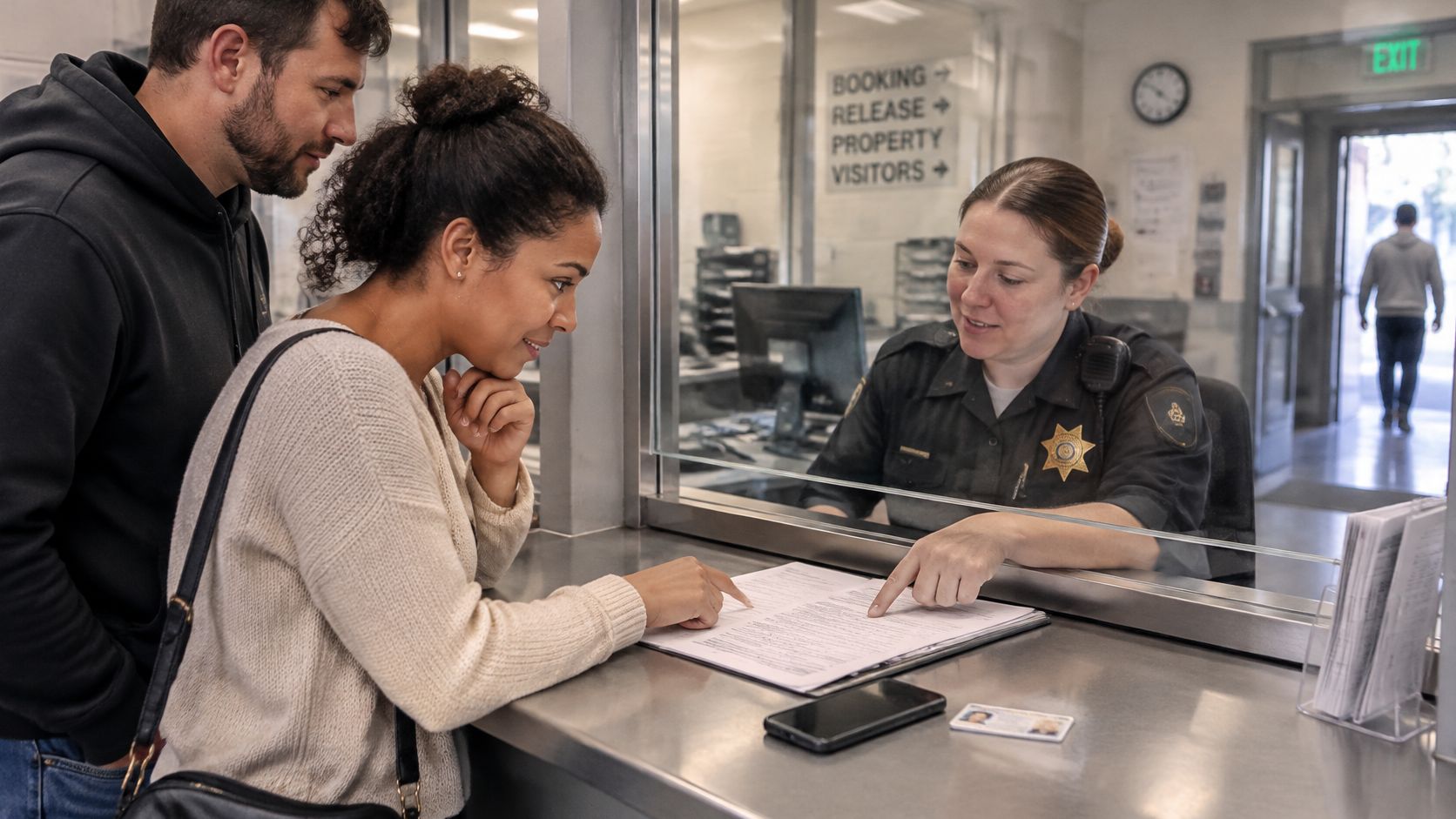
Your phone rings after midnight and the person on the line tells you your son, brother, or partner is sitting in a holding cell at the Turner Guilford Knight Correctional Center, with bail set higher than you can pay in cash. You're tired, you don't know what happens next, and you're afraid one wrong decision will keep them locked up longer. That moment is when a bail bond agency matters, not just to post money, but to guide you through release and every court date after it.
What a Bail Bond Agency Does for Families
A bail bond agency is a licensed business that posts the full bail amount with the court on a defendant's behalf, guaranteeing the defendant will appear at every hearing, in exchange for a premium paid to the agent. That guarantee is the whole point. Commercial bonding generally operates through a premium paid to an agent who guarantees the defendant's appearance to the court, as explained in a Columbia Law Review analysis of commercial bail regulation.
It is similar to co-signing a loan. The court wants assurance the defendant returns for court, the agent's surety insurer stands behind that promise, and your family pays a fee rather than the full amount upfront. Surety bail bonds provide someone to vouch for the customer in court, which is exactly what you're arranging when you call an agent.

A Midnight Call in Practice
Say you're a parent who learns at midnight that your son is booked at TGK with bail set at $10,000 and you don't have that cash on hand. You don't need to come up with $10,000 on the spot. You do need to move in order.
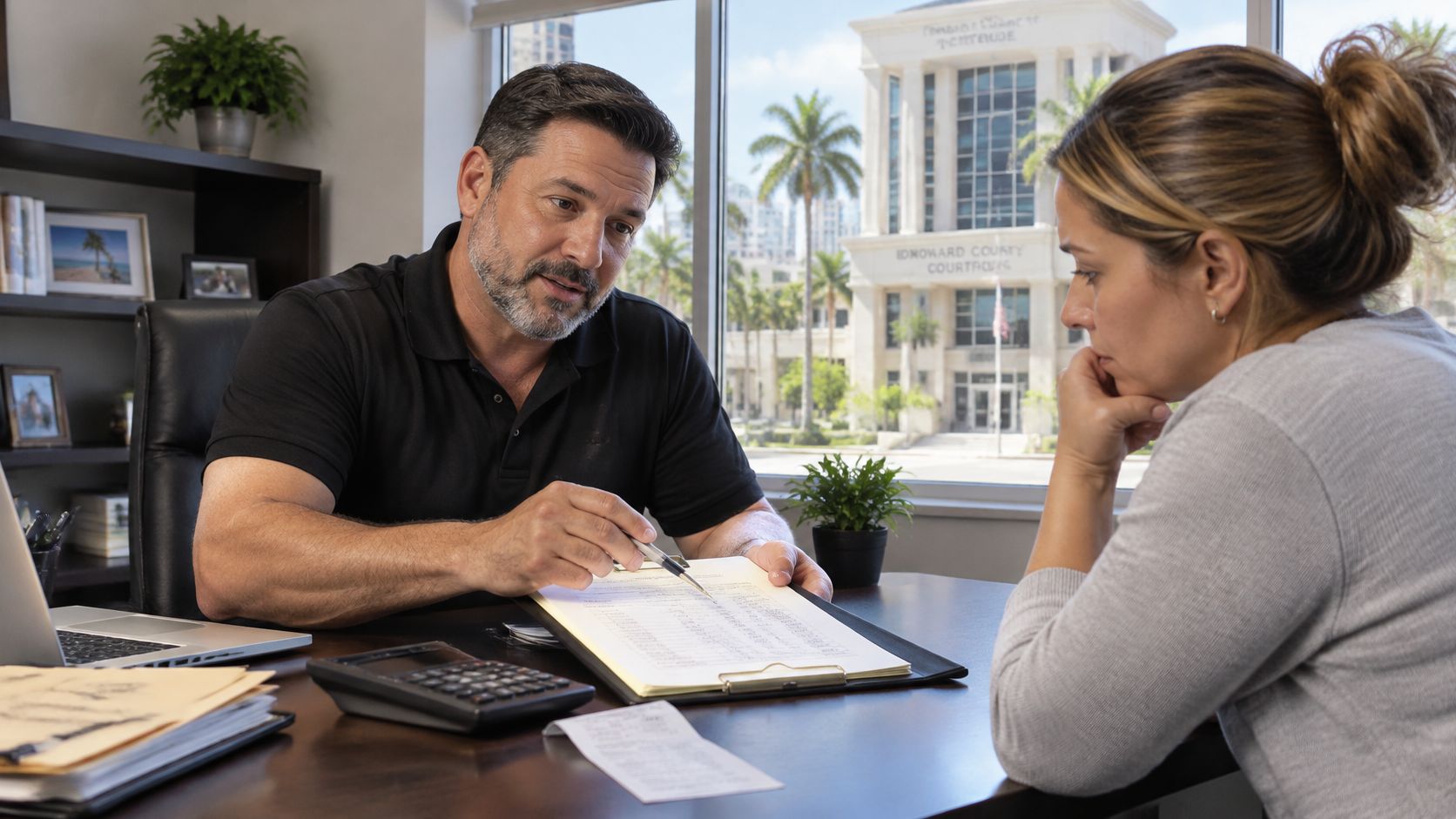
First, confirm the booking, the full legal name, and the facility. Next, ask the agent for a written premium quote that lists what's due and what isn't. Then sign only once the fees, collateral terms, and conditions are listed in writing.
From there, the agent isn't done. The agent keeps contact information and court dates current, checks in before hearings, and makes sure the defendant understands where to be and when. That's not a courtesy, it's self-protection. If the defendant doesn't appear, the bond is subject to forfeiture and the agency is on the hook.
What to remember: The agency guarantees appearance to the court, your family pays the premium instead of the full bail, and the defendant still has to show up for every hearing.
Those three pieces fit together. You're buying a legally backed promise, not a discharge of the case, and not a free pass. The charges remain, the court dates remain, and the responsibility to appear remains with the defendant long after the paperwork is signed.
Florida Licensing and Legal Requirements Explained
In Florida, a bail bond isn't just a payment. It's a legally enforceable appearance obligation under Chapter 903. Florida law defines the bond as a commitment by the licensed bail bond agent to ensure that the defendant appears at all criminal proceedings covered by the bond, and if the defendant fails to appear, the bond is subject to forfeiture, according to Florida Statutes Chapter 903.
That definition explains a lot of behavior you'll see from a legitimate agency. The agent asks for accurate phone numbers, addresses, and references because the agent needs to reach the defendant. The agent confirms court dates and release conditions because a missed hearing isn't a minor slip, it's the event that triggers forfeiture. When a case transfers, gets a continuance, or changes counsel, the obligation doesn't pause. The defendant keeps attending every required hearing until the court discharges the bond.
Florida Bail Bond Requirements and What They Mean
| Requirement | What It Means | Why It Matters to Families |
|---|---|---|
| Licensed bail bond agent | Agent must hold a current Florida license to execute bonds | An unlicensed agent cannot legally post the bond |
| Surety appointment | Licensed agent writes the bond backed by an approved surety insurer | Confirms who stands behind the guarantee |
| Filed premium rate | Premium must match the rate approved by the state insurance regulator under Florida Statutes 648.33 | Prices far below the filed rate are a warning sign |
| No unauthorized fees | Only charges permitted by statute or rule may be collected | Ask for every charge in writing before signing |
| Appearance obligation | Agent guarantees the defendant's appearance at all covered proceedings | Missed court dates trigger forfeiture of the bond |
| Premium refund on surrender | Refunds handled under the rules when a principal is surrendered | Confirm the refund terms in writing before paying |
Why the Premium Rule Protects You
Florida doesn't let agents charge whatever they want. The premium has to match the rate filed with and approved by the state insurance regulator, and it can't be higher or lower than that filed rate. That's why a price well below what other licensed agencies quote shouldn't excite you. It suggests an unlicensed intermediary, a fee that will appear later, or a compliance problem, not a bargain you found by shopping hard.
Families also need to confirm which legal instrument governs the case. A county surety bond, a state case, a federal matter, and an immigration-related detention can follow different authorities. Appearance obligations and forfeiture procedures may differ by jurisdiction, so ask the agent to name the authority before money changes hands.
We're fully licensed, and that's the baseline you should expect from any agency you consider, not a bonus feature. Ask for the agent's license number, verify it with the state insurance regulator, and confirm the named surety. Licensing protects the court, but it protects your family too, because it gives you a regulated business to hold accountable.
Services Bond Agencies Offer in Miami-Dade and at TGK
A bail bond agency in Miami-Dade does more than deliver a check to a jail window. The practical work around the bond is often what saves you hours.
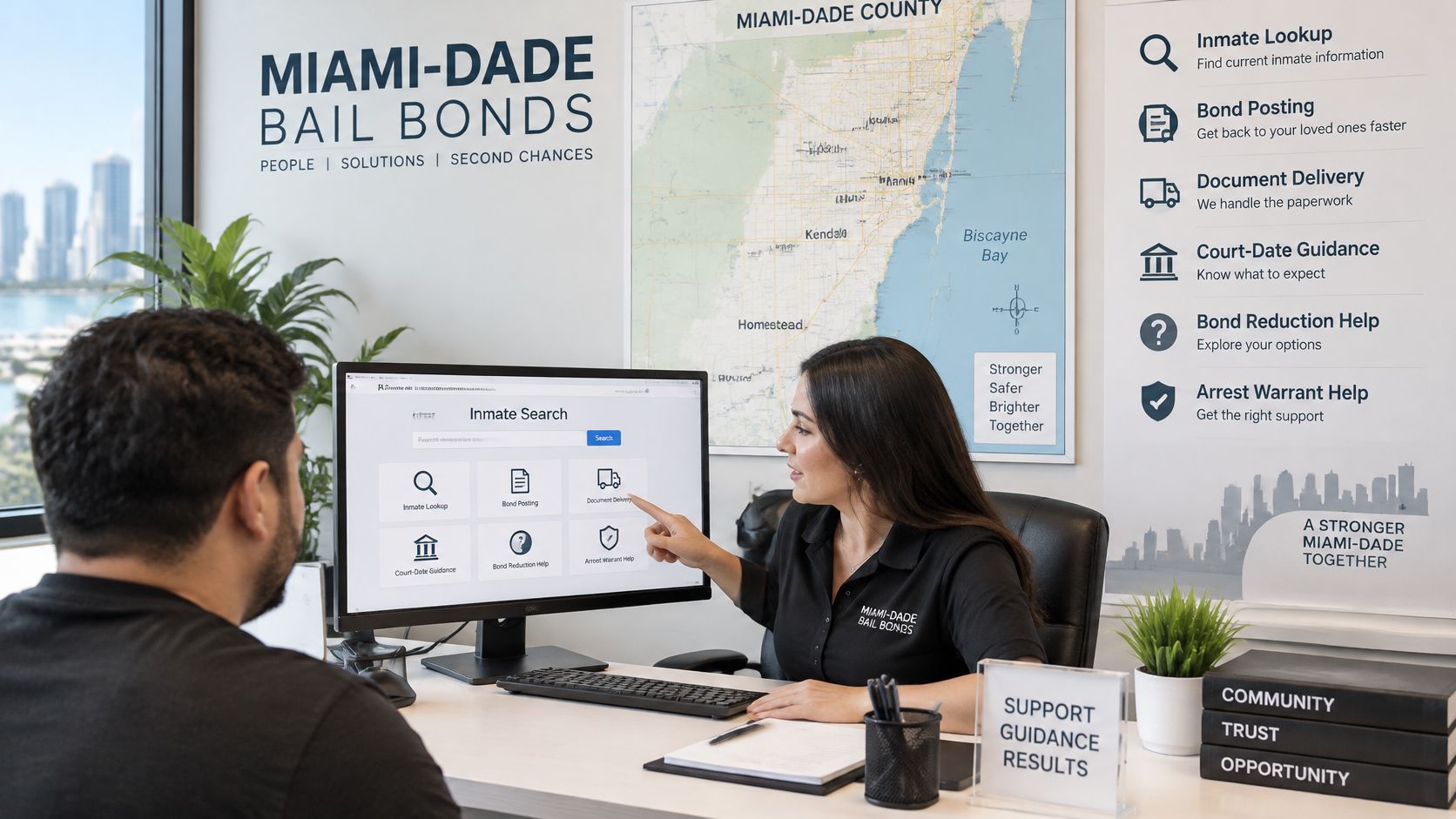
- Bail advice: A plain explanation of the bond type, premium, and next steps before you commit.
- Inmate information lookup: Confirmation of booking number, facility, charges listed, and bail amount.
- Bond posting and document delivery: Accurate paperwork taken to the jail so processing can start.
- Court-date guidance: Help documenting hearing dates, reporting duties, and judge-ordered conditions.
- Bond reduction questions: Guidance on how a reduction request moves through the court.
- Arrest warrant information: Help understanding an outstanding warrant and how it affects release.
We offer expertise in bail advice, inmate searches, court assistance, bond services, arrest warrants and bail reduction in Miami Dade County, because families rarely need just one of those things.
Why TGK Location Matters
TGK is where many Miami-Dade bookings are held, so distance isn't a cosmetic detail. An agency with staff who can reach the facility quickly can deliver documents, correct a paperwork error, and respond when the jail asks for something else. If you're arranging a bond by phone from Doral, Broward, or out of state, that local presence is what connects your signed forms to an actual release process.
Four Case Types That Work Differently
DUI arrests often move fast, but they're not condition-free. DUI bail bonds help get people who are caught drunk driving out of trouble quickly, yet the defendant may still face license, reporting, or alcohol-related conditions after release. Ask what those conditions are before the defendant walks out.
Domestic violence cases usually turn on a no-contact order. That order shapes where the defendant can live, whether they can call or text the complainant, and what happens if they cross that line. Even mutual or accidental contact can trigger a violation, a new arrest, and a bond problem.
Immigration holds create a different trap. A county bond can be approved and posted, and the defendant still doesn't leave because immigration authorities have placed a hold. Immigration bail bonds work to get people out when immigration authorities detain someone, but the agent has to account for that hold before promising a release time.
Federal cases don't follow the same county bond routine. The court handling the federal matter sets the process and conditions, so the agent must confirm that authority first. Don't pay a county-style premium on an assumption.
Statewide and transfer bonds can also apply when a defendant is moved between counties. Confirm the receiving facility and governing instrument before paying, because the paperwork has to match custody, not just the original booking.
An agency can document dates, explain conditions, and keep communication clear. It can't excuse a missed hearing, soften a no-contact order, or override a judge. If an agent tells you otherwise, that's your answer about that agent.
Bail Bond Costs, Premiums and Payment Options
A $10,000 bond does not mean a family needs $10,000 in cash tonight. In Florida, the usual route is a bail bond premium, commonly about 10% of the bail amount, paid to the licensed agent while the court remains the authority that sets bail. Once you contact us and complete the paperwork, that premium is the single payment that secures release, and it is generally non-refundable, so confirm that treatment in writing before you sign.
Florida regulates the premium tightly. Under Florida Statutes section 648.33, an agent may not execute a bail bond without charging a premium, and the premium cannot be higher or lower than the rate filed with and approved by the state insurance regulator. Florida's administrative rule also restricts agencies, sureties, and managing general agents from charging or receiving extra fees beyond the authorized premium unless a statute or rule permits it.
That is why a steep discount deserves questions. A price far under the filed rate can point to an unlicensed intermediary, an undisclosed fee structure, or a compliance problem instead of a legitimate saving. A compliant intake should show the premium calculation and any legally permitted collateral or administrative terms in writing before execution.
Typical Bail Bond Cost Items
| Cost Item | Typical Amount or Structure | What to Confirm |
|---|---|---|
| Premium | Usually about 10% of bail | Filed rate and whether any part is refundable |
| Example: $10,000 bail | About $1,000 premium | Paid to the agent, not to the court |
| Collateral | Property, vehicle or cash held against the bond | Return conditions when the bond is discharged |
| Signature bond | No collateral when the agent approves release | Approval terms and any additional charges |
| Payment plan | Schedule set within Florida regulations | Due dates and late-payment terms in writing |
Collateral is property, a vehicle, cash, or another asset held to back the bond when the agent and surety need more security. It is held as security, so the return terms matter. A signature bond goes the other way: the agent approves release without collateral, based on the defendant's stability, community ties, and the co-signer's strength.
Blandon Bail Bonds offers flexible rates and payment plans designed to get people out of jail quickly, within Florida regulations. If you are comparing how payment works step by step, review how to pay bail and arrange payment before you sign anything.
Premium math matters because bail quickly outruns a family's savings. In a national analysis of felony defendants in large urban counties reported in the RSF Journal of the Social Sciences, only 12.5% of defendants could secure release when bail was set at $50,000 or more, compared with nearly 60% when bail was $5,000 or less. Higher bail does more than raise the price; it sharply reduces who gets out at all.
Get This in Writing Before You Pay
- Premium calculation: The amount, the filed rate behind it, and whether any part is refundable.
- Collateral terms: What you're pledging, who holds it, and the exact return conditions.
- Payment schedule: Due dates, amounts, and late-payment terms.
- Any other charge: The statute or rule that permits it, stated in plain language.
If an agent won't put those four items in writing, don't hand over money or collateral. Verbal answers disappear when there's a dispute. The premium starts the case clock, and the agency's work continues through each court date until the bond is discharged.
What Happens After the Bond Is Posted
Paying the bond doesn't mean the defendant walks out in the next few minutes. That's the most common misunderstanding families have, and it causes real panic at the jail door.
Miami-Dade County explicitly warns that release can still take time even after bond is posted or charges are satisfied, according to Miami-Dade County inmate release information. The same information confirms pretrial services exists to ensure defendants return to court, so release may include continuing supervision and conditions rather than unrestricted freedom.
Stages Between Paying Bail and Physical Release
| Stage | Typical Timing | Who Controls It |
|---|---|---|
| Paperwork signed and premium paid | Same day | Agency and family |
| Bond processed by the court | During court and jail processing hours | Court and jail staff |
| Release verification | Often hours after posting | Detention facility |
| Holds or detainers | Cleared only by the placing authority | Other agency or immigration authority |
| Physical release | After all holds clear | Jail |
| Pretrial supervision begins | Set by the judge | Pretrial services |
Who Controls What
We control document accuracy, delivery, communication, and coordination. We can make sure names, booking numbers, signatures, and collateral documents are correct the first time. We can't control the jail's verification queue, a court's processing hours, or another agency's hold.
A bond discharge isn't the same as a physical release. Discharge concerns the bond obligation in the case, while release is the jail letting the person out. An out-of-county warrant, a probation hold, or an immigration detainer can keep someone in custody even when the bond in front of you is approved and posted. That distinction matters at TGK and in Doral cases, where families often treat a completed surety transaction like a guaranteed pickup time.
Ask early whether any hearing affects release timing, including what a bond appearance hearing involves. Then plan around a window, not a promise.
Arrange transportation, medication, childcare, and a call to the defendant's lawyer around a window of hours. Don't promise an employer or a child a precise pickup time the jail hasn't confirmed.
Bring identification, keep your phone charged and audible, and stay reachable in case the facility or agency needs a correction. Small details, a misspelled name or an old address, can send paperwork back for another pass. The fastest release is usually the one with no avoidable errors, even though the final timing still sits with the detention facility.
Staying Compliant With Court Dates and Release Conditions
In Miami-Dade's reported pretrial services figures, 5,800 defendants entered the program, 476, or 8%, failed to report to a court hearing, and 545, or 9%, were arrested on a new offense while participating, according to a Miami-Dade County pretrial services report. Those numbers don't prove one release method beats another. They show why the risk after release is compliance management, not just finding the lowest bond price.
Families focus on getting out. Courts focus on what happens next. A defendant who misses a check-in, ignores a no-contact order, or lets a monitoring device go uncharged can land back in custody even if the original bond was posted correctly.
Release Options Are Not Interchangeable
A surety bond uses an agent and insurer to guarantee appearance. Release on recognizance relies on the defendant's promise without a financial bond, when the judge allows it. Supervised release adds reporting to pretrial services, drug testing, curfews, or similar oversight ordered by the court.
Electronic monitoring tracks location through GPS or checks alcohol use through a monitoring device. Court-ordered restrictions can also include no-contact orders, travel limits, surrender of a passport, or staying away from a specific address. None of these options is universally best. The judge chooses based on the case, the defendant's history, and the risks the court identifies. For a fuller explanation of how supervision works in this state, review pretrial release in Florida and its conditions.
Your Post-Release Checklist
- Calendar every court date: Put the date, time, courthouse, and courtroom in a phone calendar with reminders set a week and a day ahead.
- Keep contact information current: Give the agency and court a phone number that gets answered and an address where mail reaches you.
- Report address changes immediately: Don't wait for the next hearing. Call the agency and notify the court as required.
- Track every condition in writing: Keep the release paperwork together and reread it before travel, work changes, or contact with anyone connected to the case.
- Call before you miss anything: If transportation fails, you're hospitalized, or you receive conflicting dates, call the agency and your lawyer before the deadline passes.
We can't cancel court obligations, excuse a missed appearance, or override a judge's conditions. What we can do is help you document dates, communicate changes early, and reduce avoidable administrative failures. That support matters because many bond problems don't start with running away. They start with a wrong date, an unreported move, or a condition nobody wrote down clearly.
Common Questions About Bail Bond Agencies
Is the premium ever refunded? The premium is generally payment for the guarantee itself, so don't assume you'll get it back. Ask the agent to state in writing what happens to the premium and any collateral when the bond is discharged. Collateral return and premium treatment are different questions, so get both answers before you sign.
Can a bail bond agency lower the bail amount? No, we can't change the judge's bail amount. A request to reduce bail goes to the court, usually through the defendant's attorney, who argues why a lower amount or different conditions are appropriate. We can explain the bond consequences of a reduction, but only the court can grant it.
What happens if the defendant is arrested again while on bond? A new arrest can lead the court to revoke release, raise bail, or add stricter conditions. Tell the agency and the defendant's lawyer immediately, because silence makes coordination harder and can worsen the bond outcome. Don't wait to see whether the new case goes away on its own.
Does a bail agency represent the defendant in the case? No. We guarantee appearance and manage the bond obligation. We don't argue the charges, file defense motions, or negotiate a plea. That's the role of a criminal defense attorney, and the defendant should have one involved as early as possible.
How to Choose a Bail Bond Agency and Act Fast
Price alone won't tell you whether an agency will handle your case correctly at 2 a.m. Use criteria that predict follow-through, and watch for the red flag paired with each one.
Provider Selection Criteria and Red Flags
| Criterion | What to Check | Red Flag |
|---|---|---|
| Named surety | Surety insurer named and verified | Refuses to name the surety |
| Written premium quote | Premium matching the filed rate, in writing | Price far below the market rate |
| After-hours access | Phone line that answers late-night arrests | Business-hours contact only |
| Local access | Staff able to deliver documents to TGK quickly | No local staff for Miami-Dade cases |
| Fee disclosure | Every charge listed before signing | New fees added after signing |
| Clear answers | Straight explanation of terms and conditions | High-pressure sales tactics |
We offer free and confidential advice, we're available to take calls 24 hours a day, 7 days a week, and bail services can be arranged over the phone by calling 305-597-4595. Any agency you choose should give similarly direct answers about access, licensing, and fees.
Six Steps to Act Fast Without Guessing
- Confirm the basics: Get the defendant's full legal name, booking number, and facility.
- Get bail and conditions: Confirm the bail amount and any holds or release conditions with the jail or court.
- Call two licensed agencies: Request a written premium quote from each bail bond agency you're considering.
- Verify credentials: Check each agent's license and named surety with the state insurance regulator before paying.
- Sign only on written terms: Every fee, collateral term, and payment date should be listed before money moves.
- Calendar immediately: Record every court date and condition the moment the bond is posted.
Compare at least two licensed agencies, including Blandon Bail Bonds, Inc., on these criteria before committing any money. Speed helps, but clear paperwork and reliable follow-through protect you after the release door opens.
If someone you love is in custody in Miami-Dade, at TGK, or elsewhere in Florida, we can confirm booking details, explain the premium in writing, post the bond, and keep court-date obligations clear for 24/7 assistance. Visit Blandon Bail Bonds, Inc. to start intake now or to get a confidential quote before you pay anyone.