Broward County Bondsman: Costs, Steps and Choosing One
Learn what a Broward County bondsman does, what premiums cost, how the jail release process works and how to verify a licensed agent.
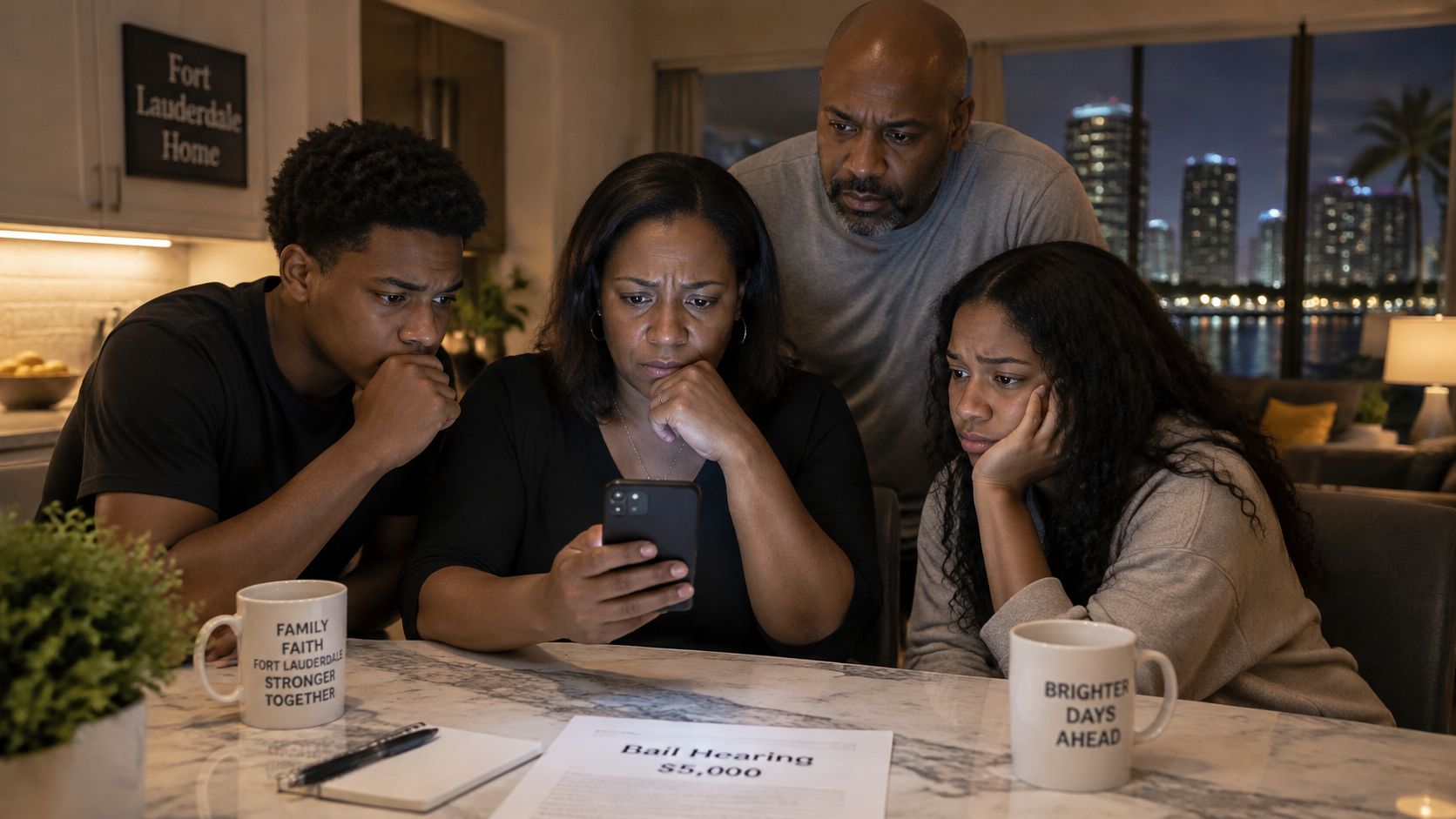
It's late in Fort Lauderdale, your phone rings, and a relative tells you they've been arrested. You may not know the charges, the facility, or what bail even costs, and you're expected to act quickly anyway.
Slow down for a few minutes and get the facts straight first. A Broward County bondsman can post a bond, but the price, paperwork, and timing follow rules you can check before you pay anyone. If you know how to read a quote and what can hold up release, you're far less likely to waste money or lose hours chasing the wrong record.
What a Broward County Bondsman Does
Say a judge sets bail at $5,000 in a worked example. Bail is the court's financial guarantee that the defendant will return for hearings. Most families can't put the full amount in cash without draining rent, car payments, or savings they'll need for an attorney.
A licensed bondsman posts a surety bond with the court for the full bail amount and takes on the risk if the defendant misses court. Think of a co-signer on a car loan. The lender gets protection, you pay a fee for that backing, and you're answerable if the borrower defaults.
The Work the Agent Actually Handles
- Confirming the custody record: The agent checks the correct name, facility, charges, and bond amount before paperwork starts.
- Preparing the file: You'll complete identification and indemnitor documents. The indemnitor is usually a family member who accepts financial responsibility tied to the bond.
- Posting and follow up: The agent delivers the bond, explains conditions, and works to keep the defendant aware of court dates.
What a Bondsman Doesn't Do
A bondsman doesn't reduce charges, decide guilt, or replace a defense attorney. The agent can't promise a case outcome, and legal strategy belongs with counsel.
Keep three terms separate. Bail is the court's amount, the premium is the agent's fee, and collateral secures the agent's risk. Before you pay, you should be able to say which of those three you're being asked for, and why.
What You Pay on Common Broward Bail Amounts
Price shopping works differently here because the premium isn't a freely negotiated local fee. The Florida Department of Financial Services bail bonds overview states that the premium for a state bail bond is 10% of the court-set bond amount, while a federal bond carries a 15% premium, and the premium becomes earned and generally nonrefundable once the defendant is released from jail.
That means you can check the math yourself before calling. Multiply the bail amount by 0.10 for a state bond. If someone quotes you far below that result, don't treat it as a bargain until you've verified the license and the full written charges.
Premium on Common Bail Amounts in Broward County
| Court-set bail | State bond premium (10%) | Federal bond premium (15%) |
|---|---|---|
| $1,000 | $100 | $150 |
| $5,000 | $500 | $750 |
| $10,000 | $1,000 | $1,500 |
| $25,000 | $2,500 | $3,750 |
| $50,000 | $5,000 | $7,500 |
Premium, Collateral, and Allowed Extras
The premium pays for the bond itself. It's generally nonrefundable once release happens, even if the case is later dismissed. Collateral is different. It's property or money pledged to secure the bond, and the agreement should state when and how it's returned after the bond obligation ends.
Some extra charges can be lawful when they're documented. Examples include transportation or lodging outside the court's jurisdiction, certain law-enforcement costs, and a surrender fee capped at $100 when no forfeiture has occurred. Those items shouldn't appear as vague service fees. Ask for the reason, the amount, and the paperwork behind each one.
Check the quote, not the headline: A low percentage that leaves out required charges or adds them later is not necessarily the lowest compliant cost.
Read every quote in five parts: bail amount, premium, collateral terms, payment timing, and itemized extras. If one part is missing, ask for it in writing. For a broader breakdown of how bail math works in other cases, see this guide on how much bail costs.
I would not pay until the numbers on paper match the calculation you did yourself. That one pause catches most billing surprises.
Cash Bond Versus Surety Bond for Your Case
If you can pay cash, when will you get it back, and what must you keep? The Broward Sheriff's Office bond information page states that cash bonds may be refundable after case completion, a court disposition, or 36 months, but obtaining the refund requires the original bond receipt or a certified copy plus court-disposition documentation.
That answer changes the decision. Cash isn't just about having the money today. It's also about tying it up, protecting the receipt, and waiting until the court side is finished or the stated period applies.
Cash Bond Versus Surety Bond in Broward County
| Factor | Cash bond posted directly | Surety bond through a bondsman |
|---|---|---|
| Upfront money needed | Full court-set bail amount | Premium only, 10% of bail for a state bond |
| Refund | Possible after case completion, court disposition or 36 months | Premium generally nonrefundable once the defendant is released |
| Paperwork to keep | Original bond receipt or certified copy plus disposition documents | Written receipt, signed agreement and itemized fees |
| Collateral | Cash itself | May be required; set by the agent |
| Best fit | Full funds available and disciplined recordkeeping | Limited cash and a need for faster release |
Which Option Fits Your Situation
Choose cash when you have the full amount available without creating a second crisis, and you can store the receipt and disposition papers safely for years if needed. Photograph them, keep copies in a separate place, and don't assume the jail or court will reconstruct your file for you.
Choose a surety bond when the full bail is out of reach and getting the person home matters more than recovering the fee. You're trading refund potential for lower upfront cash and help with the posting process. This overview of how to pay bail can help you compare payment routes before you commit.
Talk with the defendant's attorney when the case outlook affects the choice. Losing the cash bond receipt can complicate a refund, and paying a premium you'll never recover may still be the smarter move if cash is needed for defense costs.
How the Broward Release Process Unfolds
Release isn't one event. It's a chain of booking, bond approval, payment, verification, and jail processing, and a break anywhere in that chain adds waiting time.
Steps From Arrest Record to Release
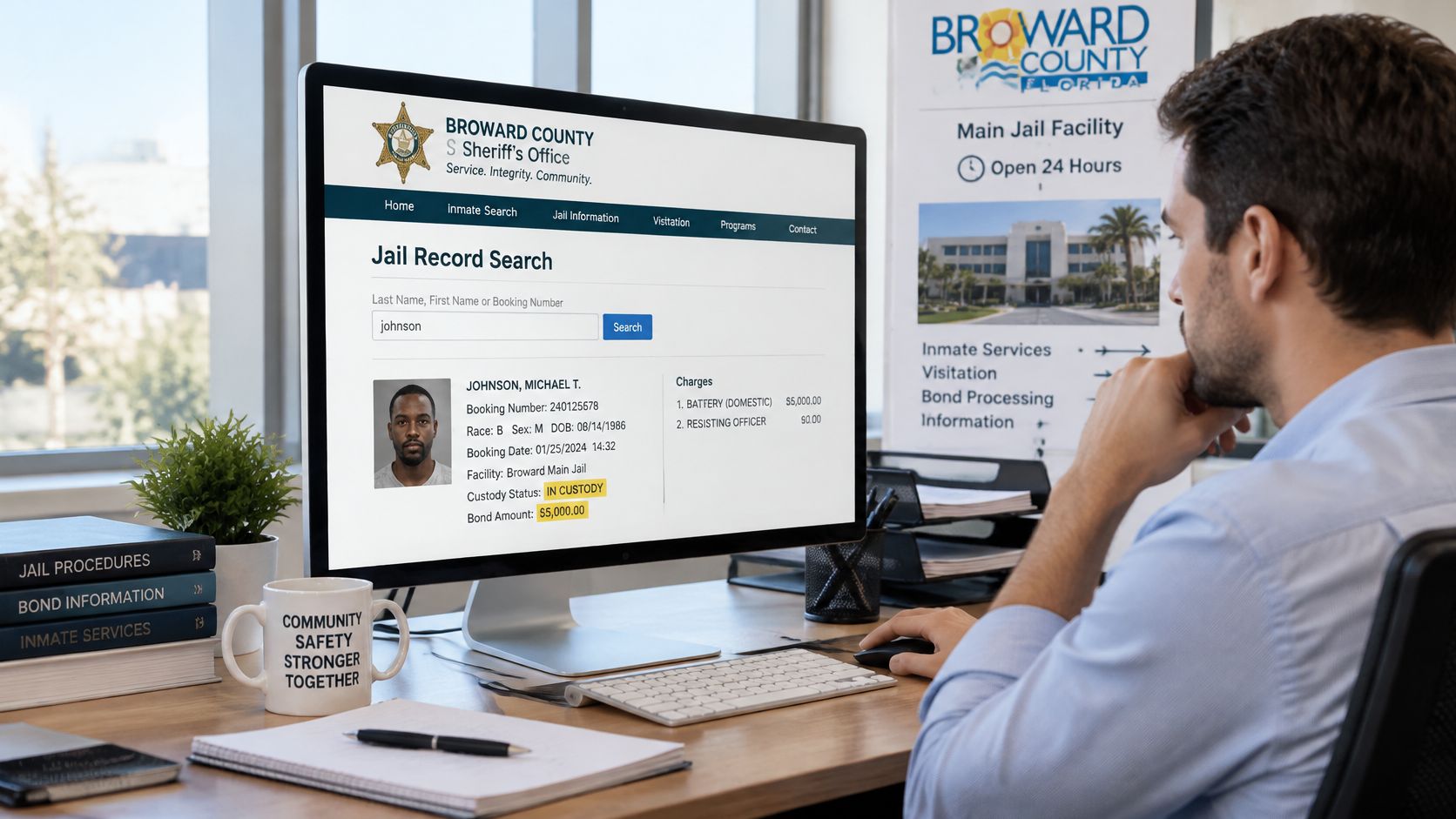
- Find the custody record. Confirm the facility, charges, and bond amount first, because a misspelled name or wrong date of birth can send paperwork to the wrong file.
- Ask about holds. Confirm there's no hold or warrant from another agency. Posting this bond won't release someone who's being held for another matter.
- Check magistrate timing. Timing can decide whether a bond is available now or whether you must wait for a judge to set or review it.
- Confirm the agent. Check the license, written premium, and contract before paying anything. Don't rely on a verbal total.
- Submit complete documents. Provide identification and indemnitor paperwork as requested. Incomplete forms are a common, avoidable delay.
- Pay through the correct channel. Surety bond payment goes through the agent's process. Cash bond payment follows the sheriff's separate window and hours.
- Keep the receipt and court instructions. Put the receipt, agreement, and next court date in one folder, then share the court date with the defendant and attorney.
The Broward Sheriff's Office detention FAQ reports that an arrestee who has not been bonded out appears before a magistrate judge the day after arrest, including weekends, with proceedings usually beginning at 8 a.m., although the presiding judge controls the schedule. The same source directs families to confirm custody status, charges, and bond information through its arrest-search channels or the Main Jail information window, which is open 24 hours, and identifies the Cash Bonds Window as operating from 6:30 a.m. to 10:15 p.m. daily.
Why Posting Is Not the Same as Walking Out
Posting the bond starts the jail's release checks, it doesn't finish them.
After posting, jail staff still verify identity, check for holds, and complete release procedures. Those steps are separate from the agent's work, so an agent who promises instant release isn't being candid. Facility transfers can also add handoffs, especially when the person is moved after booking.
Ask two timing questions before you pay. Ask the agent when the bond will be delivered, and ask the jail what checks remain after delivery. You'll get a more honest window than a single promised hour, and you'll know whether you're waiting on paperwork, a magistrate, or jail processing.
Keep one person as the contact for updates. Multiple relatives calling with different spellings, dates, or instructions can create confusion. One reachable signer with a charged phone moves the file faster.
Broward Situations That Change Cost and Timing
Most routine state bonds follow a predictable fee calculation. Problems start when the case isn't routine. A different court, another agency's hold, a transfer, or a missed appearance can change what you pay, when release happens, or both.
Volume matters too. A Broward County jail population document reports that the Broward Sheriff's Office says approximately 30,000 inmates cross through its jail system each year. In a system that busy, accurate identification and clean paperwork aren't small details. They're how your file avoids getting stuck behind corrections.
Special Cases That Change Broward Bond Cost or Timing
| Situation | What changes | First action |
|---|---|---|
| Federal charge | Premium rises to 15% of bail | Confirm the court and bond type before paying |
| Hold or warrant from another agency | Release can stall even after the bond is posted | Ask the jail to confirm all holds before paying |
| Out-of-county or out-of-state transfer | Documented transportation or lodging may be added | Request an itemized list of extra charges in writing |
| Missed court date | Bond may be forfeited and collateral pursued | Contact the agent and defense attorney immediately |
A federal charge moves the case into a different court and bond process, so confirm the bond type before anyone calculates a fee. If you need background on related court steps, this explanation of what a bond appearance hearing is is a useful starting point.
For transfers, our agents are always at the major South Florida jails and turn in the necessary paperwork once the business gives the OK. That kind of local delivery helps, but it doesn't erase another agency's hold or a judge's conditions.
If a court date is missed, don't wait for a letter. Call the agent and the defense attorney at once, gather any proof of an emergency, and follow instructions for addressing the court. Waiting can turn a fixable scheduling problem into forfeiture and a fight over collateral.
For any special case, get the exact charges, the court, and the hold status before paying. Those three facts decide the cost and the timing.
Choose a Licensed Bondsman and Make the Call
Start with the legal baseline, not a sales pitch. Under Florida Statutes §648.33, a bail-bond agent may not execute a bond without charging a premium, the premium must match the rate filed with and approved by the state insurance office, an agent may not lawfully charge either more or less than that approved rate, and violating this rule is classified as a first-degree misdemeanor.
That rule protects you if you use it. A quote that doesn't match the approved rate deserves questions, whether it's too high or suspiciously low.
Six Questions to Ask on the Phone
- Are you licensed and appointed in Florida? Verify the agent through the Florida Department of Financial Services before sending money or personal documents.
- What is the premium in writing? Check the figure against your own calculation and ask what is due now versus later.
- What collateral do you require? Ask what secures the bond, how it's held, and exactly when it's returned.
- Do you offer a payment plan? If so, ask for the schedule, total cost, and what happens after a missed payment.
- What happens after a missed court date? The agent should explain notice, forfeiture risk, and your duties as indemnitor in plain language.
- What extra charges apply? Request an itemized list, with a reason for each charge, before you sign.
Red Flags That Should Slow You Down
- An unusually low rate: Regulated premiums cannot be discounted below the approved filing.
- Pressure to pay cash on the spot: You should receive written terms, not urgency in place of paperwork.
- No license shown: A person who won't identify their license and appointment shouldn't handle the bond.
- No written receipt: Don't leave without documentation of what you paid and what happens next.
If the agent can't explain the premium, collateral, and missed court consequences in plain sentences, call someone else.
Use this short routine before the first call. Gather the defendant's full name, date of birth, facility, charges, and bail amount. Confirm the custody record and holds, calculate the expected premium, and compare at least two licensed agents on the same six questions above. Pay only after you receive the written terms, receipt, and court-date instructions.
Blandon Bail Bonds, Inc. is one licensed option to include in that comparison. Our bail bondsmen are licensed in South Florida, and we provide services in Miami Dade County Jail, TGK Jail, Broward County Jail, Palm Beach County Jail, Monroe County Jail, Key West, statewide in Florida, and nationwide. Bail services can be arranged over the phone by calling 305-597-4595.
Ask us the same six questions you'd ask any other agent. A Broward County bondsman should welcome that check, explain every charge, and tell you plainly what could still delay release.
If someone you care about is in Broward County Jail, get the custody record, calculate the expected premium, and call for a written quote before you pay anything. Blandon Bail Bonds, Inc. can explain your bond options, required paperwork, and payment steps, and arrange bail services by phone at 305-597-4595.